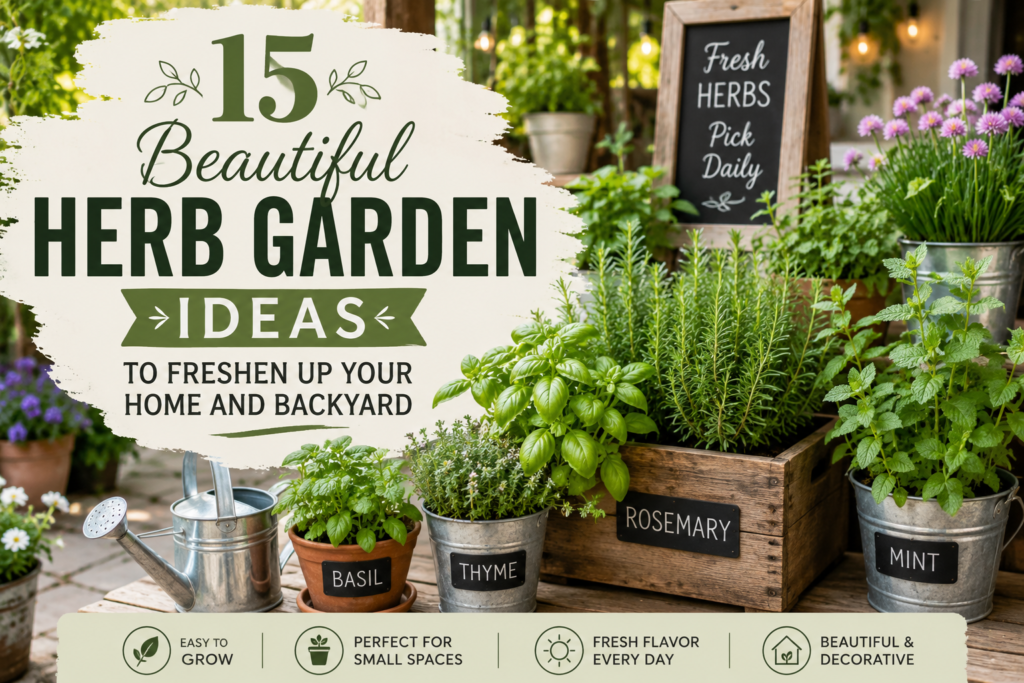

There is something special about stepping outside and picking fresh herbs right from your garden. Whether you live in a large home with a backyard or a small apartment with limited space, growing a herb garden is one of the easiest and most rewarding ways to bring nature into your daily life.
Herbs are more than just a flavoring for food; they create an atmosphere that is peaceful, welcoming, and alive. The best part is you don’t need to be a gardening expert to get started.
Looking for some creative herb garden ideas? Here are some ideas to get your own little green space blooming.
Start Small with Kitchen Herbs
If you’re a novice gardener, start with some easy herbs that you will actually use in your cooking. Basil, mint, parsley, rosemary, and cilantro are all good choices for beginners.
The sunny kitchen windowsill may be the perfect place for a small indoor herb garden. Simple pots or matching containers will immediately make the area feel cozy and fresh, while also giving you easy access to herbs while cooking.
Create a Raised Herb Garden Bed
Raised garden beds are gorgeous choices for backyards and patios. They help drainage, sort herbs, and make it easier on your back and knees while gardening.
You can divide herbs by how often you use them or even create sections for cooking, making tea, or natural remedies.
Wooden raised beds also add a charming farmhouse touch to outdoor spaces.
Use Vertical Space for Small Areas
Limited space doesn’t mean you can’t grow herbs. Vertical herb gardens are perfect for balconies, patios, and apartment living.
You can use:
- Wall-mounted planters
- Hanging baskets
- Wooden pallets
- Tiered shelves
- Over-the-door organizers
Vertical gardens save space while adding greenery and texture to plain walls.
Grow Herbs in Mason Jars
For a simple and affordable DIY project, try planting herbs in mason jars. They look stylish in kitchens and work especially well for small herbs like thyme or oregano.
You can place them on open shelves, countertops, or windowsills for a clean and modern look.
Adding labels or handwritten tags can make the display even more charming.
Build a tea herb garden.
If you enjoy herbal teas, consider growing herbs specifically for homemade tea blends.
Popular tea herbs include:
- Mint
- Chamomile
- Lemon balm
- Lavender
- Spearmint
A tea garden creates a relaxing atmosphere and gives you fresh ingredients for calming drinks year-round.
Add Decorative Touches
Herb gardens don’t have to look purely functional. Decorative touches can make them feel more personal and inviting.
Try adding:
- Small garden signs
- Stone pathways
- Fairy lights
- Wooden crates
- Vintage watering cans
- Decorative pots
These little details help turn a simple herb garden into a peaceful outdoor retreat.
Best Herbs for Beginners
Some herbs are easier to grow than others. If you’re just getting started, these herbs are low-maintenance and forgiving:
Basil
Perfect for pasta dishes, salads, and homemade sauces.
Mint
Fast-growing and refreshing for teas and summer drinks.
Rosemary
Hardy, fragrant, and great for roasted meals.
Parsley
Easy to maintain and useful in many recipes.
Chives
Simple to grow and excellent for adding flavor to everyday dishes.
Tips for Keeping Herbs Healthy
Most herbs grow best with:
- Plenty of sunlight
- Well-draining soil
- Regular watering without overwatering
- Good airflow
It’s also important to trim herbs regularly. Harvesting encourages new growth and helps plants stay healthy and full.
Final Thoughts
An herb garden is more than just a gardening project—it’s a simple way to make your home feel warmer, healthier, and more connected to nature.
Whether you choose a few pots on your kitchen windowsill or a full backyard herb garden, growing your herbs can bring beauty, flavor, and relaxation into everyday life.
Sometimes the smallest gardens create the most meaningful moments.